







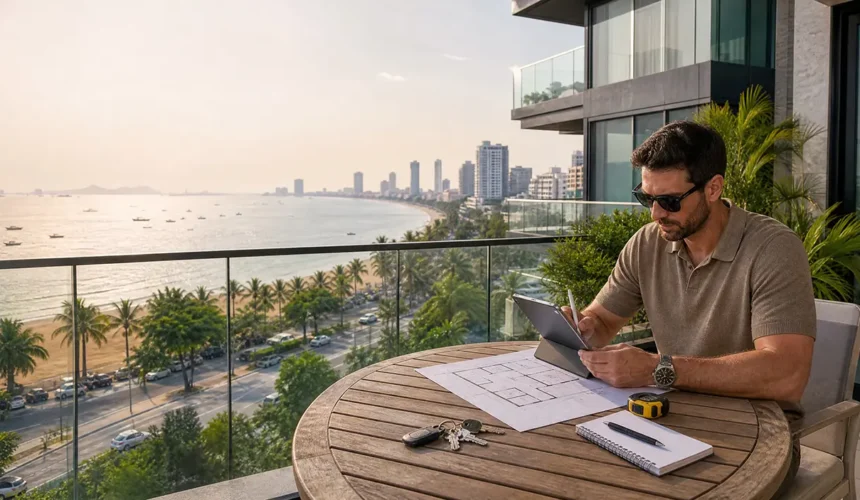
Short answer: The best beachfront condo Pattaya choice is not necessarily the one with the highest floor or the most dramatic listing photos. Compare the exact location, real view from the actual unit, sun and wind exposure, noise and access, complete monthly and one-off costs, building management, and the unit’s physical and legal condition. Revisit your shortlist at different times and have project-specific documents checked before signing or transferring money.
Introduction
Pattaya offers varied coastal living, from busy central beachfront areas to quieter stretches farther from the city centre. The Tourism Authority of Thailand describes Pattaya as a major beach destination with water activities and access to nearby islands. That variety is useful, but it also means that “beachfront condo” is too broad a label to make a decision by itself.
For a buyer, the choice combines lifestyle, building quality, ownership structure, and carrying costs. For a long-term renter, daily comfort, contract terms, reliability, and access to work, healthcare, shops, and airports matter more than holiday appeal. U-Tapao International Airport publishes passenger and public-transportation information, but the best route depends on the exact unit and traffic.
The guidance below is for comparing the project and the unit under consideration. It does not assume that every Pattaya development has the same beach access, view, facilities, legal status, or fees.
1. Start with the location, not the brochure
Define “beachfront” precisely
Listings may use “beachfront,” “first line,” “sea view,” and “near the beach” as if they mean the same thing. Ask the agent or owner to identify the project on a map and explain the route from the entrance to the beach. Check whether a road, public path, seawall, vacant plot, restaurant, or another building sits between the condominium and the water.
A unit can have a sea view without being directly on the shoreline. A project can also be close to the beach but have inconvenient access from its entrance. Treat the marketing label as a starting point and verify the site yourself.
Match the area to your routine
Central Pattaya may suit residents who value restaurants, shopping, nightlife, and frequent transport. Jomtien and other coastal sections may suit people seeking a more residential rhythm. The right choice depends on the individual street, not only the district name. Map the journeys you will actually make, walk them in the heat, test them after dark, and check parking or ordinary transport at a normal weekday time.
2. Test the sea view as a real feature
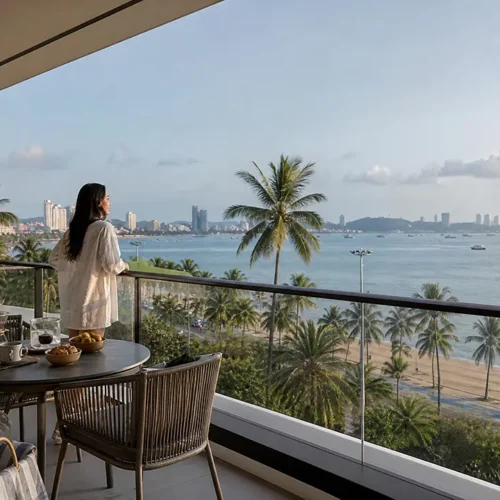
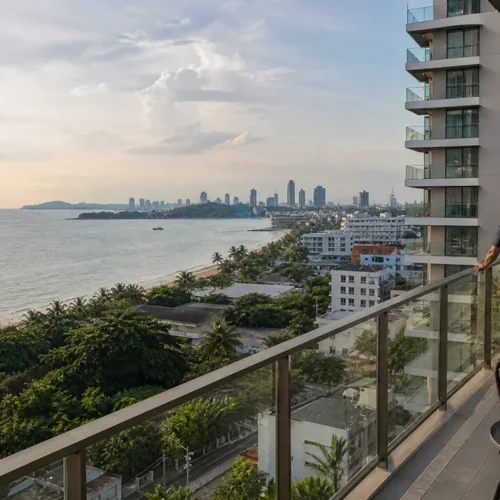
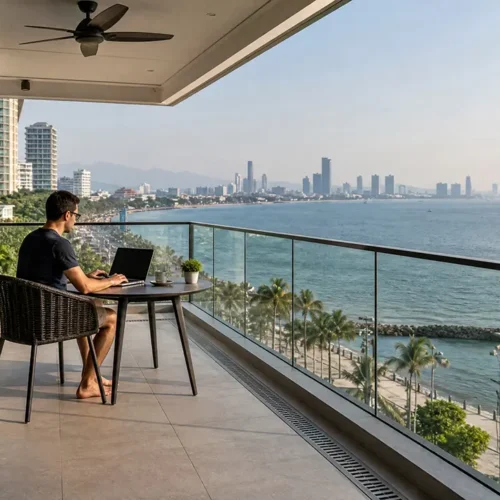
A sea view depends on angle, height, distance, weather, obstructions, and time of day. Listing images may show a different floor or unusually clear weather. Stand at the window and balcony of the exact unit, look left and right, and confirm which rooms have the view. Request the floor plan and check balcony depth, window condition, glare, and nearby structures. Do not assume a vacant plot guarantees a permanent view; ask what is known about neighbouring land and development activity.
Practical rule: Pay for the view you can verify from the exact unit today, not an unconfirmed promise about the future skyline.
3. Check orientation, heat, wind, and salt air
Orientation affects light, heat, and comfort. In general, west-facing rooms can receive stronger afternoon sun, while east-facing rooms may feel brighter in the morning. Balcony depth, shading, glazing, neighbouring buildings, and the tower’s angle also matter, so visit at more than one time. Look for heat damage, hard-working air conditioning, and corrosion on rails, brackets, drains, window tracks, and exposed fixings. Ask about servicing and façade maintenance.
The Thai Meteorological Department publishes Pattaya observations and forecasts, including temperature, humidity, wind, visibility, and rainfall. Use official information for climate context, but remember that it cannot predict the conditions on one particular balcony.
4. Evaluate the surrounding environment
Spend time outside the entrance during the day, evening, and, if possible, early morning. Listen for traffic, music, construction, deliveries, generators, pumps, nightlife, refuse collection, and cleaning. Check drainage, water pooling, pavements, lighting, crossings, odours, smoke, mosquitoes, and the distance to everyday shops.
Pattaya City’s open-data platform lists datasets for air and noise monitoring, water-pollution checks, green-space management, and sanitation-related services. These are useful background signals, not a substitute for visiting the exact street and asking the juristic person about building-specific conditions.
5. Calculate the full ongoing cost
The advertised sale price or monthly rent is only one part of the budget. For a purchase, request written costs for common areas, sinking fund, utilities, parking, transfer, legal work, insurance, furnishing, repairs, and management. For a rental, confirm utilities, internet, cleaning, repairs, parking, deposits, and renewal costs. Ask how fees are calculated, when due, whether major works are planned, and how arrears are handled.
The Thai Embassy property guide explains that transfer-related fees, duties, or taxes may be allocated by agreement and that project and transaction documents require checking. Do not rely on an informal promise about who pays; have current terms reviewed for the specific unit.
6. Inspect the unit and building systematically
A viewing should be an inspection. Test doors, windows, water pressure, hot water, drainage, sockets, air conditioning, appliances, internet, and safety features. Look for dampness, mould, stains, cracks, and patched repairs. Confirm included furniture and appliances and record damage. Renters should attach a move-in inventory; buyers should consider an independent inspection. Also inspect lifts, fire exits, access control, parking, waste areas, pumps, generators, pool plant, and common-area cleanliness. Ask about maintenance requests, sinking funds, and planned repairs.
7. Clarify ownership and documents before committing
Foreign condominium ownership is a legal issue, not a sales feature. Thai Embassy.com explains that a condominium must be registered under the Condominium Act and that foreign ownership is subject to the project’s 49% foreign quota. It also discusses evidence of funds transferred from overseas for qualifying foreign purchases. Savills likewise identifies foreign quota and Foreign Exchange Transaction (FET) documentation as key issues for foreign freehold buyers.
These are general principles, not confirmation that the unit is eligible. Ask for title information, project registration, current foreign-quota confirmation, seller authority, outstanding fees, and transfer requirements. For a resale, check ownership, mortgages, liens, and encumbrances. For an off-plan or newly completed project, verify permits, completion, handover obligations, and remedies. Obtain independent legal advice before signing, paying a deposit, or using a company or nominee structure.
Practical step-by-step actions
- Write your non-negotiables. Define budget, minimum space, beach access, view, parking, pets, work needs, lease length, and noise tolerance.
- Shortlist by map. Separate true shoreline access from “near beach,” then identify daily services and transport routes.
- Request documents. Ask for the floor plan, current cost schedule, sale or tenancy terms, and available building information.
- View the exact unit twice. Visit in daylight and evening, and test the route outside the project.
- Inspect and record. Photograph defects, test systems, note noise, and list every included item.
- Ask written questions. Confirm fees, repairs, deposits, ownership, quota, parking, pets, and renewal or transfer terms.
- Use independent review. Before a purchase or substantial deposit, consult a qualified lawyer and, where appropriate, an inspector.
- Decide on evidence, not urgency. If a key answer is unavailable, pause.
Questions to ask before deciding
Ask the same questions of every shortlisted project:
- Is the advertised view from this exact unit, and what is directly below, beside, and in front of it?
- What are the current common-area fees, sinking-fund requirements, parking charges, utilities, and other recurring costs?
- Are there planned repairs, special assessments, construction works, or known water, lift, façade, or corrosion issues?
- What is included in the sale or rental, and what condition will be recorded at handover?
- Is the unit eligible for the intended ownership structure, and can the project provide current quota and title information?
- Are there restrictions on pets, subletting, renovations, or short stays?
- What are the deposit, cancellation, renewal, notice, transfer, and move-out terms?
FAQ: Choosing a beachfront condo in Pattaya
01.
What is the best area for a beachfront condo Pattaya search?
There is no single best area. Choose the specific beach section and street that match your routine, noise tolerance, transport needs, and budget.
02.
Is a sea-view condo the same as a beachfront condo?
No. A sea-view condo may be set back from the shore or separated by a road or other buildings. Verify the map, access route, and view from the exact unit.
03.
Should I choose a high floor for the best view?
A high floor may improve sightlines but can increase wind, heat, lift dependence, and cost. Compare comfort and maintenance as well as the view.
04.
What costs should a buyer budget beyond the purchase price?
Ask about common-area fees, sinking-fund contributions, utilities, parking, insurance, furnishing, repairs, legal fees, and transfer-related costs. Confirm the allocation of taxes and fees in writing.
05.
Can a foreigner buy a condominium in Pattaya?
A foreign buyer may be able to own a qualifying condominium unit under Thai law, subject to project registration, foreign quota, and documentation requirements. Rules are case-specific, so obtain professional advice before signing or transferring money.
06.
How can I check whether a condo is well managed?
Inspect common areas and building systems, ask for fee and maintenance information, and ask about planned works and the juristic person’s communication process.
07.
Should I trust guaranteed rental-return claims?
No. Rental demand, prices, occupancy, and expenses can change. Treat projections as assumptions and decide based on your own affordability and intended use.
Conclusion
Choosing a beachfront condo Pattaya residents can enjoy starts with a precise definition of “beachfront” and ends with evidence about the exact unit. Check the location at realistic times, test the view and orientation, investigate noise and coastal maintenance, calculate every ongoing cost, inspect the building as well as the apartment, and confirm legal and contract details independently.
If you have a shortlist, Beachfront Condo Pattaya can help you organise the comparison and arrange a low-pressure conversation or viewing. Bring your priorities and questions; the final decision should remain based on verified facts for the project and the unit under consideration.